
All board members and staff of the Securities and Exchange Board of India (Sebi) will be required to declare their assets, liabilities, trading activities, and relevant relationships at multiple stages - at the time of appointment, annually, upon key events, and at exit. This is part of a series of recommendations by a high-level committee constituted by the markets regulator in a bid to overhaul conflict-of-interest and disclosure rules.
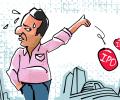
India's equity markets may have expanded rapidly, but initial public offerings (IPOs) are increasingly becoming exit vehicles for early investors rather than as engines for raising long-term capital, a shift that undermines the spirit of public markets, Chief Economic Advisor V Anantha Nageswaran warned on Monday at a CII event.

Institutional investors lapped up Coal India shares in this fiscal's maiden government stake-sale, with Rs 6,500 crore bids pouring in on the first day of the offer-for-sale. The government had offered over 8.31 crore shares to institutional investors on Thursday under the offer-for-sale (OFS), but received bids for 28.76 crore shares or 3.46 times. At the indicative price of Rs 226.12 a share, the bids of institutional buyers are worth Rs 6,500 crore.

The Securities and Exchange Board of India (Sebi) on Wednesday announced a slew of measures to ease the compliance burden in the stock markets ecosystem, encourage more companies to list on the bourses after reverse flipping to India, and facilitate greater foreign fund flows into government bonds.

The ministry of railways has decided to withdraw its decision on sharing of convenience fee earned by IRCTC on online bookings of train tickets, the DIPAM secretary said on Friday.

The National Stock Exchange (NSE) has offered to pay Rs 1,388 crore to the Securities and Exchange Board of India (Sebi) to settle the colocation and dark fibre cases, potentially clearing the way for its much-awaited initial public offering (IPO). This is the biggest-ever settlement plea made with the markets regulator.

Seasoned bureaucrat and a stickler for rules Finance Secretary Tuhin Kanta Pandey will be at the helm of capital market regulator, Securities and Exchange Board of India (SEBI), for three years. The 1987-batch Odisha-cadre Indian Administrative Service (IAS) officer, Pandey, would replace Madhabi Puri Buch, whose three-year term ends on Friday.

'Such stocks may be useful for aggressive portfolios, but should not be part of the core holdings.'

Stock exchanges' levy of penalties, ranging from Rs 3 lakh to Rs 12 lakh, on public-sector undertakings (PSUs) for lapses in board composition for the 2024-25 October-December quarter has brought forth issues of governance. Last month, 16 PSUs requested bourses to waive these penalties, arguing that these lapses were neither due to negligence nor within their control, as the appointment of directors is managed by the government.

The Maharashtra government has become the owner of iconic Air India building with the Union government approving transfer of the asset on Thursday. The Maharashtra government bought the Air India building at Nariman Point in Mumbai for Rs 1,601 crore. "GoI has approved transfer of Air India building, Mumbai of AI Assets Holding Company Ltd (AIAHL) to Government of Maharashtra (GoM) at consideration of Rs.1601 cr. GoM has agreed to waive dues of Rs. 298.42 cr, which would have been otherwise payable by AIAHL to GoM for this transaction," DIPAM secretary Tuhin Kanta Pandey said in a post on X.

Algo trading should be segregated in a separate account with only risk capital deployed.

The country's largest insurer LIC on Tuesday listed its shares at a discount of 8.11 per cent at Rs 872 per share on the NSE. On the BSE, the shares got listed at Rs 867.20 apiece, down 8.62 per cent over the issue price of Rs 949 a share. LIC had fixed the issue price of its shares at Rs 949 apiece after a successful initial public offering, which fetched Rs 20,557 crore to the government.
Shares of Life Insurance Corporation (LIC) of India hit fresh record lows amid sustained decline in Adani Group stocks. Its stock finished at Rs 567.8, down 2.9 per cent over its previous close. The state-owned insurer's market value is now down Rs 2.4 trillion, or 40 per cent, compared to initial public offering levels.

"Financial bids for Air India disinvestment received by Transaction Adviser. Process now moves to concluding stage," DIPAM Secretary Tuhin Kanta Pandey tweeted.

Under its new chairman Tuhin Kanta Pandey, the Securities and Exchange Board of India (Sebi) has gravitated towards greater transparency and ease of doing business, setting an objective of "effective and optimum" regulation. On Monday, during its first board meeting under Pandey, the regulator has decided to constitute a high-level committee (HLC) to review conflicts of interest and unveiled initiatives to simplify regulatory processes.

Finance Minister Nirmala Sitharaman on Friday participated in a traditional 'halwa' ceremony, marking the final stage for the preparation of Union Budget 2025-26 to be unveiled on February 1 in the Lok Sabha. The ceremony is a customary ritual in which traditional dessert 'halwa' is prepared and served to officials and staff members of the finance ministry who are involved in the preparation of the Budget.

The Centre has received Rs 6,651 crore as interim dividend from 12 public sector undertakings (PSUs) on Monday, edging towards its Rs 50,028 crore dividend target for the ongoing fiscal. Power Grid Corporation of India (PGCIL) has transferred Rs 2,506 crore as a dividend tranche to the government, while NMDC and Nuclear Power Corporation of India transferred interim dividend of Rs 1,605 crore and Rs 972 crore, respectively. The government has received dividend tranches of Rs 913 crore from GAIL, Rs 351 crore from Hindustan Aeronautics, Rs 149 crore from Bharat Electronics, among others, Department of Investment and Public Asset Management (DIPAM) secretary Tuhin Kanta Pandey tweeted.

Post handing over of Air India to the Tatas, government officials will be free to book their travel with any airline that offers them the best price. And, the Centre will not have a tie up with any carrier, department of investment and public asset management (DIPAM) secretary Tuhin Kanta Pandey said. "The government is not mandating travel by any particular airline, going forward, after handing over Air India because there won't be any state-owned airline," he said. The department of expenditure (DoE) will soon issue instructions to government departments for official travel as this needs to be done before handing over Air India to the new buyer, he said.

The government in January restarted the divestment process of Air India and invited bids for selling 100 per cent of its equity in the state-owned airline, including Air India's 100 per cent shareholding in AI Express Limited and 50 per cent in Air India SATS Airport Services Private Ltd.

Department of investment and public asset management secretary Tuhin Kanta Pandey on Tuesday said the weak debut of the country's largest insurer LIC on the bourses was due to unpredictable market conditions and suggested investors to hold on to the stock for long-term value.

'Nearly 10 million people will benefit from the increase in the rebate limit for those earning up to Rs 12 lakh.' 'We expect all that money will come back into the economy in either savings, consumption, or investments.'

The government is likely to file draft papers for the mega initial public offering of LIC with market regulator Sebi by next week, while a portion of the issue would be reserved for anchor investors, a top official said on Wednesday.

'The Budget needs to focus more on social welfare schemes.'
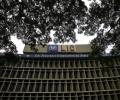
The government has appointed 10 merchant bankers including Goldman Sachs (India) Securities, Citigroup Global Markets India, and Nomura Financial Advisory and Securities India to manage the mega initial public offering of country's largest insurer LIC. Other selected bankers include SBI Capital Market, JM Financial, Axis Capital, BofA Securities, JP Morgan India, ICICI Securities, and Kotak Mahindra Capital Co Ltd, a circular on the divestment department website said. "Government has finalised the book running lead managers and some other advisors for the IPO of LIC," DIPAM Secretary Tuhin Kanta Pandey tweeted. The divestment department had invited applications for the appointment of merchant bankers on July 15.

The Centre has conceded most of the demands of potential buyers of Neelachal Ispat Nigam Ltd (NINL). These include lowering the lock-in period for sale of assets to one year and allowing the new buyer to undertake the amalgamation of a special purpose vehicle (SPV) into NINL. An inter-ministerial group led by Department of Investment and Public Asset Management (Dipam) secretary Tuhin Kanta Pandey and the core group of secretaries on divestment (CGD) headed by Cabinet secretary Rajiv Gauba have decided that the lock-in period can be reduced to one year from the date of completion of sale, from the earlier three years proposed by Dipam, an official in the know said.

The Jane Street-Sebi saga is more than a legal dispute -- it's a litmus test for India's ambitions as a global financial hub.

The 2022-23 Budget has projected a disinvestment target of Rs 65,000 crore for next financial year. This is significantly lower than the estimated Rs 1.75 lakh crore budgeted for 2021-22. In the revised estimates, the target for 2021-22 has been cut to Rs 78,000 crore.

Oil Minister Hardeep Singh Puri on Thursday indicated that the much-delayed privatisation of oil major BPCL may not happen in the near future, saying there is "no proposal whatsoever" on his table for now. As part of its asset monetisation plan, the government had in November 2019 put Bharat Petroleum Corporation (BPCL) on the block and said it would completely sell its 52.98 per cent stake in the country's second largest state-run oil refiner and marketer. Though it had received three tentative bids, it got only one financial bid from Vedanta group, forcing it in May 2022 to shelve the plan pending a "comprehensive review".

The Budget announcement of zero tax for earnings upto Rs 12 lakh per annum and the rejig of tax slabs across the board should prompt more than 90 per cent of individual taxpayers to embrace the new tax regime as compared to the about 75 per cent as of now, CBDT Chairman Ravi Agrawal said. Agrawal also highlighted the government's focus on "non-intrusive" tax administration through enhanced use of Artificial Intelligence (AI) and simplified tax processes for common taxpayers. He emphasized the benefits of the new tax regime (NTR), which offers simple calculations and allows taxpayers to file their ITR without professional help. The CBDT chief stated that the Budget provisions related to income tax payment benefit all income earners, not just those earning Rs 12 lakh per annum, creating a positive sentiment in the economy and propelling growth. The department is also harnessing technology, including AI and data analytics, to widen and deepen the tax base, resulting in increased compliance and tax revenue. Agrawal further highlighted the positive impact of data availability and simplified tax processes on compliance rates, citing examples of taxpayers filing revised returns and paying taxes after being prompted by the department's data analysis.
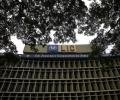
The government is unlikely to come up with the IPO of Life Insurance Corporation (LIC) in the current financial year ending March 2022, as the valuation of the state-owned behemoth is taking more than anticipated time, and the preparatory work is still far from complete. There are still some issues that need to be addressed with regard to the valuation of LIC, a senior official of one of the merchant bankers said. Even after the valuation, there are several regulatory processes that have concluded, the official said.

The new owners of Air India will have to retain all the employees of the national carrier for at least one year post which they can offer a VRS. The gratuity, pension fund and post retirement medical benefits of existing and past employees too would be honoured by the new owner, civil aviation secretary Rajiv Bansal said. Tata Sons has emerged as the winning bidder for Air India with the government accepting its Rs 18,000 crore offer to acquire 100 per cent of the debt-laden state-run carrier.

The airline's 100 per cent shareholding in profit-making budget carrier Air India Express as well as 50 per cent shareholding in equal joint venture Air India SATS Airport Services would also be sold.

Union Finance Minister Nirmala Sitharaman, along with her team of bureaucrats, delved into the fine print of the 2024-25 Budget documents in a press conference, detailing the government's road map on bringing down the debt-to-GDP ratio and bold tax measures.

The government will transfer about Rs 16,000 crore of unpaid fuel bills and other pending dues that Air India owes to suppliers, to a special purpose vehicle before handing over the loss-making airline to the Tata Group, a senior official said. Air India Assets Holding Ltd (AIAHL), which will hold non-core assets of Air India such as land and building, will also be saddled with 75 per cent of the airline's debt that the Tata Group is not taking over. Besides the debt, the excess liability going to AIAHL comprises unpaid fuel bills to oil companies, airport operators and vendors, said Tuhin Kanta Pandey, Secretary to the Department of Investment and Public Asset Management - the department running the privatisation programme of the government.

Domestic capital market will see the launch of India's largest-ever initial public offering (IPO) next week. Life Insurance Corporation of India's (LIC's) landmark Rs 21,000-crore IPO will open for subscription on Wednesday. Here's a look at some unique features of this mega offering, which are not typically seen in other IPOs.
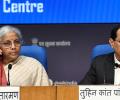
'Our attempt to honour the taxpayer has been since 2014 and more actively since 2019-2020 onwards.'
Life Insurance Corporation of India (LIC) has increased the size of its shareholders' fund to Rs 6,600 crore from Rs 100 crore in a bid to accommodate a larger shareholder base ahead of its public listing. The size of the fund has been enhanced by retaining two years' of dividend and issuing fresh capital, said an official. Increasing the size of the shareholders' fund will help boost the number of shares for allotment in the insurer's initial public offering (IPO). The corpus represents the amount of equity in a company that belongs to its shareholders.

Salt-to-software conglomerate Tata group was among "multiple" entities who on Monday put in preliminary bids for buying the government's stake in loss-making carrier Air India.

Finance Minister Nirmala Sitharaman on Tuesday said monetisation of Central Public Sector Enterprises (CPSE) assets is based on the principle of value creation for the government and investors and would bring about a paradigm shift in infrastructure augmentation and maintenance. Chairing the National Workshop with the states/UTs on Asset Monetisation organised by Niti Aayog, the minister sought the collaboration of states for the holistic development of infrastructure. She said India can become a $5 trillion economy, while striking the right balance between fiscal imperatives and socio-economic welfare, through active collaboration between the public and private sector.

There will be no second term for President Kovind and no elevation for Vice President Naidu.
